
Solutions
value-added assembly
We provide value-added magnetic assemblies engineered for manufacturability, precision integration, and scalable production performance.
Enabling Larger Magnetic Assemblies Through Precision Gluing

Allstar Magnetics engineers bonded magnetic and magnet assemblies for repeatable manufacturing—reducing risk, controlling tolerances, and enabling scale.
Overview
Designing larger magnet assemblies often exceeds the practical limits of single-piece ferrite or permanent magnets. Precision gluing enables new form factors and performance outcomes—but only when material behavior, adhesive chemistry, alignment control, and process repeatability are fully understood. Allstar Magnetics applies magnet gluing as a controlled manufacturing process, allowing complex assemblies to move from concept to production without compromising accuracy, scalability, or cost efficiency.
Allstar validates bonding processes for production from the outset—developing fixtures, alignment controls, adhesive dispensing methods, and documented work instructions that support repeatable output at scale. What begins as a prototype-ready solution is engineered to transition seamlessly into controlled, volume manufacturing.
Discuss Your Assembly Requirements
let's talkDiscuss Your Assembly Requirements
Speak With An Engineer
Magnetic Assemblies vs. Magnet Assemblies
Designing bonded magnetic systems requires clarity between ferrite cores and permanent magnets, as each behaves differently in both application and manufacturing.
Ferrite cores—commonly used in transformers, inductors, and EMI suppression—are not permanent magnets. They are magnetic materials designed to guide and shape magnetic flux and are typically assembled into magnetic assemblies.
Permanent magnets, by contrast, are materials such as ceramic (ferrite) magnets, neodymium (NdFeB), samarium cobalt (SmCo), or Alnico, which generate a constant magnetic field and are often bonded into magnet assemblies.
Allstar Magnetics supports both use cases, applying precision gluing techniques that account for the distinct material properties, tolerances, and performance requirements of each.
Why Gluing Matters
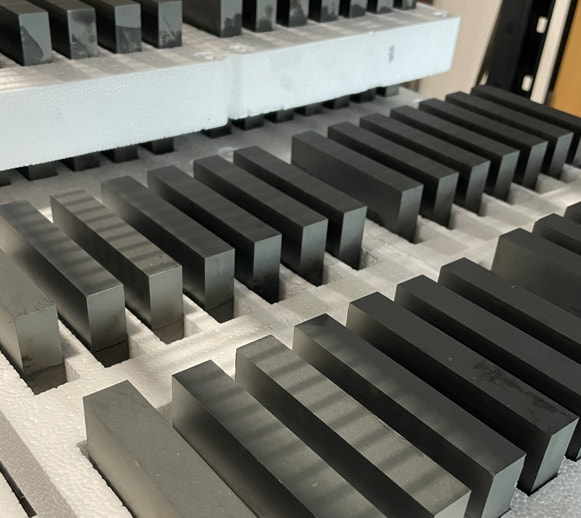
- Enables larger magnetic and magnet assemblies, including bonded ferrite cores and
permanent magnets, to achieve custom geometries and performance outcomes. - Opens new design categories not possible with single‑piece magnets
- Reduces material waste and overall cost


What Makes It Hard
- Porous ferrite material compatibility
- Adhesive and activator selection
- Alignment, squareness, and minimal glue gaps
- Repeatability at production scale
- Fundamental differences between ferrite cores and permanent magnet materials
- Managing brittle ferrite materials versus dense permanent magnets during bonding
Each of these variables must be controlled not only for technical accuracy, but for production consistency. Allstar engineers bonding processes with scalability in mind—standardizing alignment methods, validating adhesive cure parameters, and implementing quality checkpoints that ensure repeatable performance across production runs.
Adhesive Considerations for Magnet Assemblies
Bonding magnets into assemblies requires more than simply selecting a strong adhesive. Engineers must evaluate how the adhesive system will perform under real operating conditions, including mechanical loads, temperature changes, and material interactions.
Several key factors influence adhesive selection:
Mechanical Load
Magnet assemblies may experience both static loads (constant force) and dynamic loads (changing forces during operation). The adhesive system must maintain bond strength under both conditions while preventing movement or separation of the magnet components.
Thermal Performance
Temperature fluctuations introduce stress at the bond interface as materials expand and contract at different rates. Differences in thermal expansion between magnets, adhesives, and mounting materials must be carefully evaluated to ensure the adhesive can absorb these stresses without failure.
Surface Conditions and Coatings
Many rare-earth magnets are plated with nickel to prevent corrosion. While beneficial for durability, this smooth plating surface can make adhesion more challenging. Proper surface preparation and adhesive selection are critical to achieving reliable bonding.
Adhesive Gap Thickness
The bond line thickness directly influences adhesive performance. A gap that is too thin may limit adhesive strength, while an overly thick bond line can reduce alignment precision and structural integrity.
Environmental Conditions
Humidity, corrosion exposure, and chemical compatibility must all be considered when bonding magnets. Some adhesives may accelerate corrosion if their chemistry is incompatible with the magnet coating or surrounding materials.
Because every application involves different mechanical, environmental, and production constraints, there is rarely a single adhesive solution suitable for every magnet assembly. Successful bonded magnet designs require evaluating these factors together to ensure both performance and manufacturability.
The Allstar Difference
- Manufacturability and optimization considered from day one
- Deep expertise in adhesives and material behavior
- Proven application processes for repeatable precision
- Collaborative engineering and prototyping approach
- Documented production processes and quality controls designed for scalable manufacturing
Proven Results
- Rapid prototyping and validation
- Production runs completed in weeks, not months
- Scalable designs with consistent performance

Applications
- Ferrite core magnetic assemblies
- Permanent magnet assemblies, including ceramic (ferrite) magnets
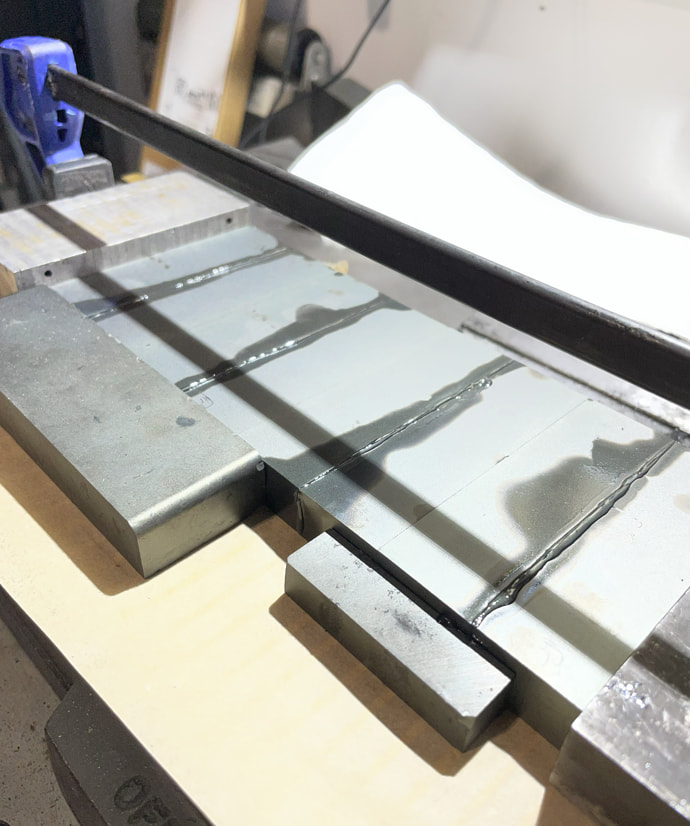
- Permanent magnets bonded to steel
- Linear track and precision motion systems
Allstar’s manufacturing-first approach ensures bonded magnetic and magnet assemblies are designed for production from the outset. By integrating engineering, materials expertise, and process control early in the design cycle, Allstar delivers solutions that maintain tight tolerances, minimize variability, and scale reliably. Our production teams apply process controls, documented work instructions, and repeatable fixturing systems to ensure consistency across low-, mid-, and higher-volume builds. This manufacturing discipline reduces variability, protects tolerances, and supports predictable scaling. The result is not just a successful prototype, but a production-ready magnet assembly that supports long-term product performance and manufacturability.
Not Sure the Best Path Forward? Let’s Talk.
We’ll review your design, discuss constraints, and help you evaluate the most scalable manufacturing solution.

Why choose allstar magnetics?
For design and engineering expertise that delivers innovative,
high-quality magnetic solutions, ensuring your concepts are seamlessly transformed into reliable, industry-leading products through close collaboration with your team.