
PRODUCTS
NEODYMIUM (NdFeB) MAGNETS
From Prototype to Production with Allstar Magnetics
We are your experienced partner for neodymium (NdFeB) magnet solutions—supporting your design from early feasibility through scalable production.
We help engineers evaluate:

- Material fundamentals
- Design and performance tradeoffs
- Manufacturing constraints
- Supply chain considerations
- Production scalability
What Is a Neodymium (NdFeB) Magnet?
Neodymium magnets—also called NdFeB magnets—are the strongest commercially available permanent magnets, enabling compact, high‑performance designs across demanding applications.
Key characteristics:
- Rare‑earth permanent magnet based on the Nd₂Fe₁₄B crystalline phase
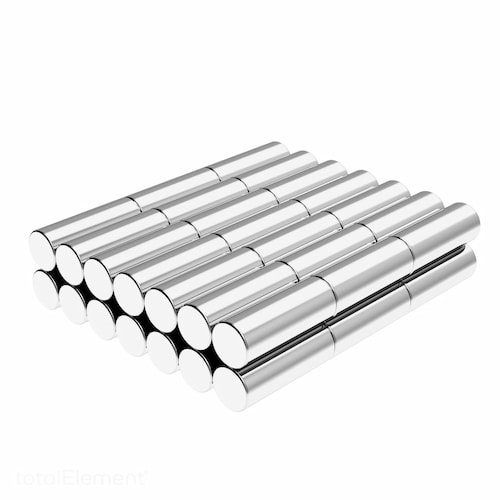
- Extremely high magnetic strength per unit volume
- Powder‑based manufacturing aligned for maximum magnetic output
- Tunable grades for temperature, coercivity, and performance requirements
Why engineers choose NdFeB:
- Smaller magnet size without sacrificing force or field strength
- High efficiency in compact assemblies
- Broad grade selection for tailored performance
Design considerations to account for:
- Brittle mechanical behavior
- Sensitivity to corrosion (coatings required)
- Reduced performance at elevated temperatures without proper grade selection
How Do Neodymium Magnets Compare to Other Magnet Types?
| Property | NdFeB | SmCo | Ainico | Ferrite |
|---|---|---|---|---|
| Energy Product (BHmax) | Highest | High | Moderate | Low |
| Max Operating Temp | 80–200°C (grade dependent) | Up to 350°C | Up to 540°C | Up to 250°C |
| Corrosion Resistance | Poor (coating required) | Good | Good | Excellent |
| Brittleness | High | High | Low | Moderate |
| Relative Cost | Moderate | High | Moderate | Low |
| Heavy Rare Earth Dependency | Grade dependent | Yes | No | No |
Bottom line: NdFeB delivers unmatched magnetic strength—but requires thoughtful grade, coating, and design decisions.
How to Select a Neodymium Magnet Grade
Choosing the right grade early prevents performance issues and redesigns later.
How to Read an NdFeB Grade
NdFeB grades communicate two critical attributes:
- Grade Number (e.g., N35, N42, N52)
- Indicates maximum energy product (BHmax)
- Higher number = stronger magnetic output per unit volume
- Suffix (Thermal Performance Class)
| Suffix | Thermal Class | Typical Max Temp |
|---|---|---|
| (none) | Standard | ~80°C |
| M | Medium | ~100°C |
| H | High | ~120°C |
| SH | Super High | ~150°C |
| UH | Ultra High | ~180°C |
| EH | Extreme High | ~200°C |
A higher suffix improves resistance to heat and demagnetization, typically at a slight cost to maximum strength.
Which Grade Is Right for Your Application?
Selecting the optimal grade requires balancing these four factors:
- Magnetic output: Maximize strength within the available volume—especially critical in compact designs.
- Operating temperature: Applications above 80°C require suffix grades to prevent permanent demagnetization.
- Coercivity margin: Motors, actuators, and high‑field environments need sufficient intrinsic coercivity (Hci).
- Supply chain stability: Higher‑temperature grades may require heavy rare earths (Dy, Tb), introducing cost and sourcing risk.

Engineering Considerations
Selecting a neodymium magnet is about matching magnetic performance to real‑world operating conditions.
Key Magnetic Properties
- Remanence (Br): Drives achievable field strength
- Coercivity (Hc) and Intrinsic Coercivity (Hci): Resistance to demagnetization
- Maximum Energy Product (BHmax): Magnetic output per unit volume
Operational Stability
- Magnetic properties change with temperature
- Peak temperature and thermal transients matter—not just steady state
- Insufficient margin can cause irreversible performance loss
Environmental Exposure
- NdFeB magnets require protective coatings
- Coating choice affects tolerances, fits, and long‑term reliability
- Environmental protection should be designed in—not added later
Design Limitations to Plan for Early
Geometry and Tolerances
- Powder‑based sintering limits achievable shapes
- Thin walls, tight internal corners, and complex geometries increase risk
- Tolerances are looser than machined metals—air gaps must account for this
Mechanical Properties
- Brittle, ceramic‑like behavior
- High compressive strength but low tensile strength
- Vulnerable to chipping during handling or press‑fit operations
Environmental Constraints
- Corrosion sensitivity without proper coatings
- Elevated temperatures reduce coercivity
- Design tradeoffs between strength, temperature, and durability are unavoidable

Manufacturing Capabilities That Reduce Risk and Scale
Our competitive advantage lies in bridging magnet design, fabrication and assembly integration to help customers move from prototype to production with fewer surprises and greater consistency.
We support custom NdFeB magnet programs by focusing on what matters most in production environments:
- Design‑for‑manufacture guidance early in the process: Geometry, tolerances, coatings, and magnetization strategy are evaluated before designs are locked—reducing scrap, rework, and late‑stage redesigns.
- Real‑world understanding of sintered NdFeB constraints: Powder‑based processing imposes limitations that directly affect yield and performance. Our team helps engineers design within those constraints to achieve repeatable results.
- Performance consistency over nominal strength: We prioritize magnetic alignment, coating control, and integration details that protect performance at scale—not just best‑case prototype results.

Magnet Fabrication with Production in Mind
NdFeB magnets are formed, not machined, which means manufacturing decisions directly impact performance and reliability.
Allstar Magnetics helps customers navigate:
- Pressing direction and magnetic orientation constraints
- Geometry tradeoffs that affect yield and tolerance capability
- Grinding and finishing considerations for brittle materials
- Coating selection that balances protection, thickness, and fit
By addressing these variables together, we help customers avoid common production failure modes such as chipped parts, inconsistent air gaps, or degraded magnetic output over time.
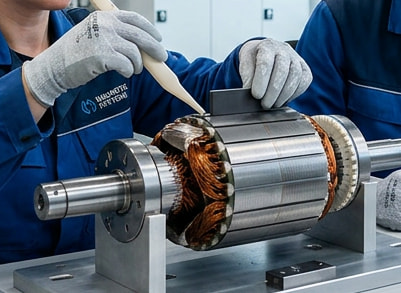
Integration‑Focused Assembly Support
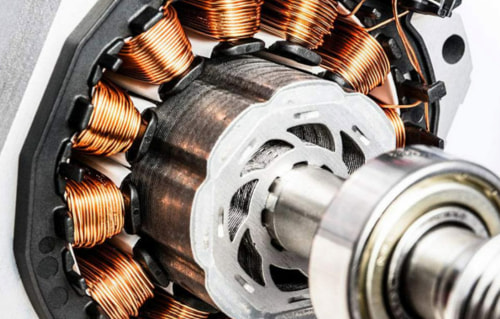
Neodymium magnets rarely act alone. Their performance is shaped by how they are integrated into the final system.
We support magnet‑centric assemblies that account for:
- Mechanical retention and stress management
- Adhesive bonding or encapsulation strategies
- Steel flux paths and magnetic circuit efficiency
- Assembly sequence and magnet handling considerations
Designing the magnet and the assembly as a unified system reduces risk, improves yield, and enables smoother scale‑up.
Prototype to Production—Without Reinventing the Design
Many concepts succeed in prototypes but fail when scaled. Allstar Magnetics helps close that gap by maintaining continuity across the lifecycle:
- Prototype builds that reflect production intent
- Early identification of performance‑critical features
- Process awareness that supports repeatability and quality control
- Design decisions aligned with volume manufacturing realities
This approach minimizes downstream changes and helps customers maintain confidence as volumes increase.
Talk with an Allstar Magnetics engineer to discuss how manufacturing considerations can be addressed early—before they become production obstacles.
Applications
Motors, Actuators and Generators
- High torque and power density
- Reduced system size and weight
- Performance tuned through geometry and magnetization direction

Sensing and Position Feedback
- Stable, repeatable magnetic fields
- Tight control of orientation and consistency
- Reliable output across temperature and time
Holding, Coupling and Retention
- High pull force in compact designs
- Balance of strength, robustness, and tolerance forgiveness
Energy Conversion and Acoustic Systems
- Fast response and high efficiency
- Low moving mass and controlled field uniformity
Production Scalability
Repeatability and Quality Control
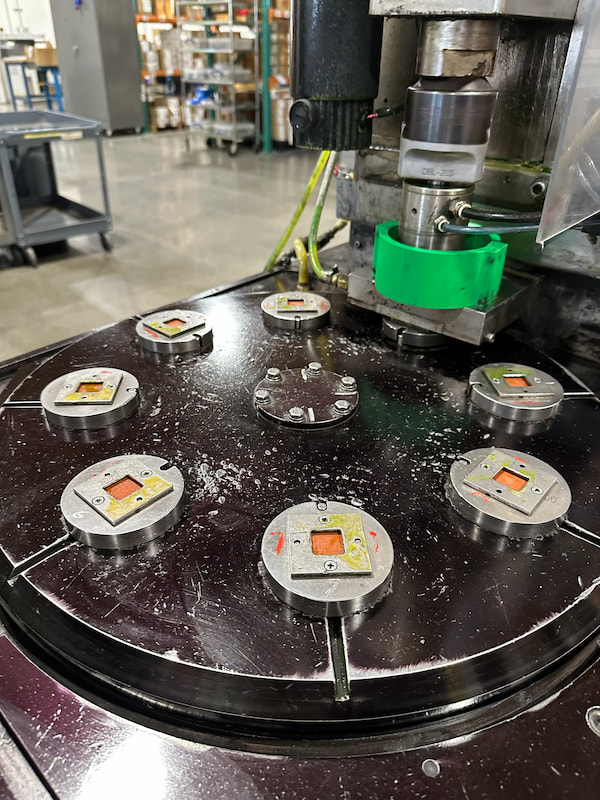
As volumes increase, small variations can impact performance:
- Pressing alignment
- Density and coating thickness
- Magnetization consistency
Critical features should be controlled through process capability—not post‑assembly adjustment.
Design for Scalability
Scalable designs account early for:
- Assembly sequence
- Magnet handling methods
- Tolerance stack‑ups
- Yield and repeatability
HRE‑Free Materials: Reduce Supply Chain Risk
Where conditions allow, HRE‑free NdFeB grades offer:
- Improved supply chain stability
- More predictable pricing
- Comparable performance at lower temperatures
Frequently Asked Questions
What is the strongest neodymium magnet grade?
N52 offers the highest energy product. For temperatures above 80°C, lower‑energy grades with higher coercivity suffixes often perform better in real‑world conditions.
What temperature can neodymium magnets withstand?
Standard grades: ~80°C
- H: ~120°C
- SH: ~150°C
- UH: ~180°C
- EH: ~200°C
Do neodymium magnets need a coating?
Yes. Common options include:
- Nickel (Ni‑Cu‑Ni)
- Epoxy
- Zinc
- Parylene
Coatings affect final dimensions and should be selected early.
Can neodymium magnets be custom‑shaped?
Yes—within sintering constraints. Early consultation improves feasibility and yield.