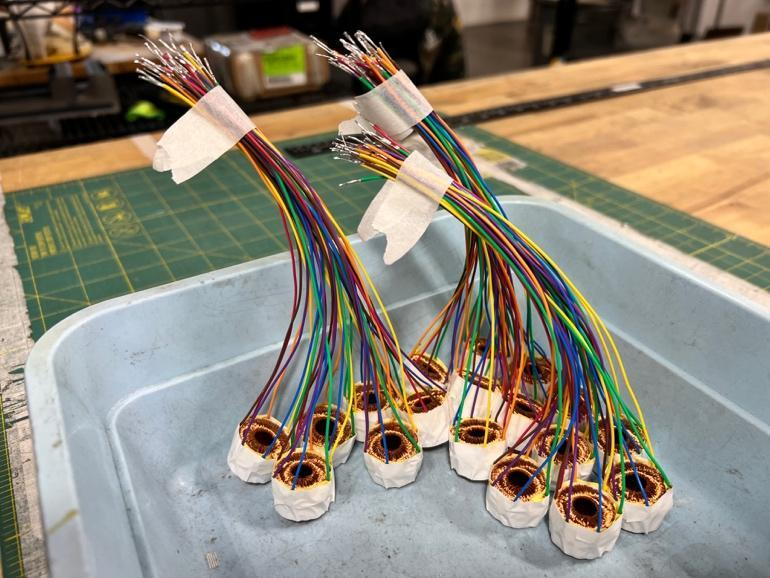
HRE-Free Neodymium Magnets: When Strength Meets Supply-Chain Stability

When a transformer, inductor, coil, or other wound magnetic component is central to product performance, sourcing it like a commodity part can create risk. Custom-wound magnetics influence efficiency, reliability, thermal behavior, packaging, manufacturability, and long-term production planning.

The right supplier relationship can make the difference between a component that simply meets a drawing and a solution that supports the full application.

For engineering and procurement teams working in demanding markets, Allstar Magnetics brings more than access to custom-wound components. Allstar acts as a magnetics partner, helping teams evaluate requirements, move through prototype iterations, manage sourcing complexity, and plan for repeatable production.

Custom-Wound Magnetics Are Too Important to Treat Like Catalog Parts
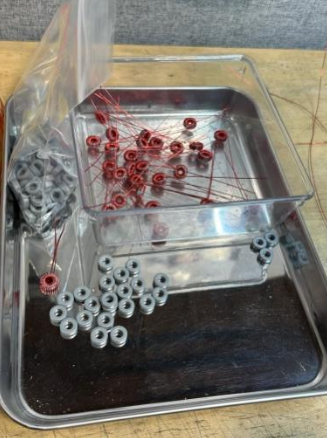
Off-the-shelf transformers and inductors can work well when requirements are simple. But many OEM applications need custom wound magnetics that are designed around a specific electrical load, footprint, insulation system, thermal profile, mounting method, operating environment, or production target. In those cases, the component is not just another line item on the bill of materials. It is part of the product architecture.

A parts supplier may be able to quote a drawing. A true partner helps ask the right questions before the design is locked. What thermal constraints need to be managed? Will vibration affect the winding, air gap, or mounting approach? Does the insulation system support the environment? Can the prototype be built in a way that will scale? These are the kinds of questions that shape better outcomes before cost, lead time, and manufacturability become late-stage problems.

Where Partnership Matters Most

Custom-wound magnetics become especially important in applications where failure, rework, or supply uncertainty can create major program risk. Allstar supports teams across demanding markets where electrical performance, mechanical reliability, and production planning all must work together.

  • Space applications: wound magnetics may need to account for vacuum environments, outgassing concerns, insulation selection, potting materials, launch vibration, and long-term reliability.
  • Military, defense, and UAV systems: transformers and inductors may need to support compact power stages while withstanding vibration, shock, and rugged operating conditions.
  • Oil and gas downhole equipment: custom-wound magnetics may need to survive high temperature, high pressure, vibration, and no practical access for repair after deployment.
  • Medical devices and robotics: compact, reliable wound magnetics support power conversion, motion control, and tightly constrained packaging requirements.
  • Data centers and AI infrastructure: transformers and inductors support power conversion at scale as compute density and power demand continue to rise.
  • Switchgear and power infrastructure: wound magnetic components support power distribution, sensing, auxiliary power, filtering, and control systems.

Prototype Support Is Only the Beginning

Prototype work is often where the value of a partner becomes clear. Early builds reveal whether assumptions about size, heat, insulation, mounting, or performance are realistic. They also reveal whether a design can move beyond a one-off sample and become a repeatable production component.

Allstar helps customers use the prototype stage strategically. Rather than treating a prototype as a quick transaction, Allstar helps teams think through the next step: evaluation, refinement, sourcing, manufacturability, lead time, inventory needs, and production readiness. That broader view helps reduce surprises when a project moves from engineering validation to purchasing, qualification, and production planning.

Engineering and Procurement Need the Same Partner
Engineering teams need custom-wound magnetics that meet performance, reliability, and environmental requirements. Procurement teams need confidence in sourcing, communication, lead time, repeatability, and long-term availability. When these needs are handled separately, projects can slow down or become harder to manage.

Allstar helps connect those priorities. By combining magnetics knowledge with sourcing support and manufacturing coordination, Allstar gives teams a more practical way to manage custom transformer, inductor, and coil requirements. The result is a partner relationship that supports both the technical side of the project and the business realities behind it.

Why Allstar Is More Than a Parts Supplier

The difference between a supplier and a partner shows up in the moments when the project is not simple. A supplier responds to a request. A partner helps clarify the requirement. A supplier quotes a part. A partner helps identify tradeoffs. A supplier ships components. A partner helps customers think through prototype-to-production decisions that affect schedule, quality, and long-term success.

That is where Allstar’s value stands out. For customers working with custom-wound magnetics, Allstar provides practical design support, responsive prototyping, sourcing coordination, inventory programs, and production-ready thinking. The goal is to help customers get the right wound magnetic solution into the right application with fewer handoffs and less uncertainty.

Start With the Requirement, Not Just the Part Number

If your project needs a custom-wound transformer, inductor, coil, or application-specific wound magnetic component, the best place to start is with the requirement. Share the specification, drawing, prototype challenge, performance target, or production concern. Allstar Magnetics can help evaluate the right path forward and support the project from early design through production planning.