
Renewal Certification
Certified for confidence: Allstar Magnetics renews key quality standards
What this means for customers
Renewed scope of registration

August 2026: Issue 12
By Tyee Harpster, President & CEO, Allstar Magnetics
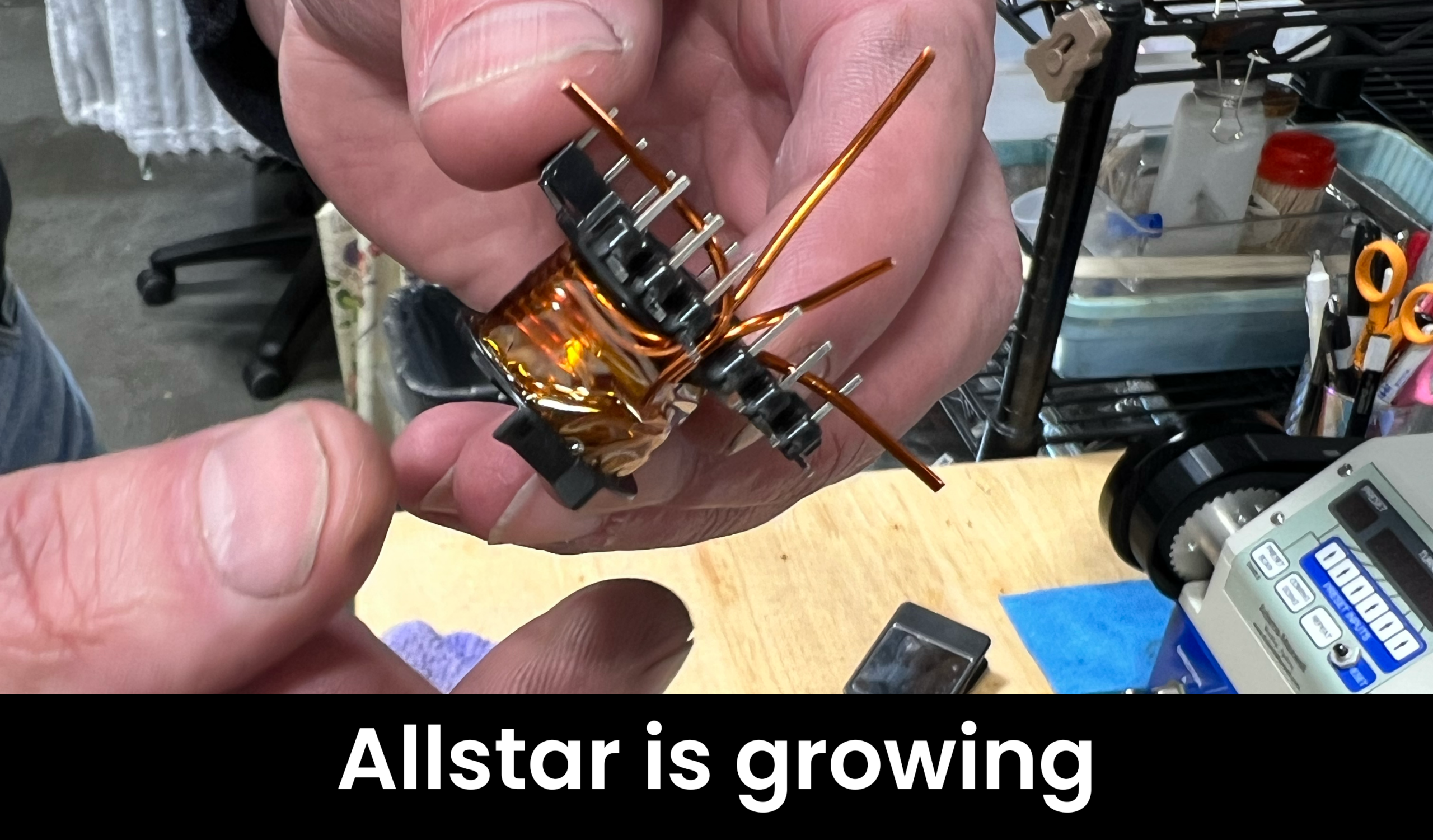
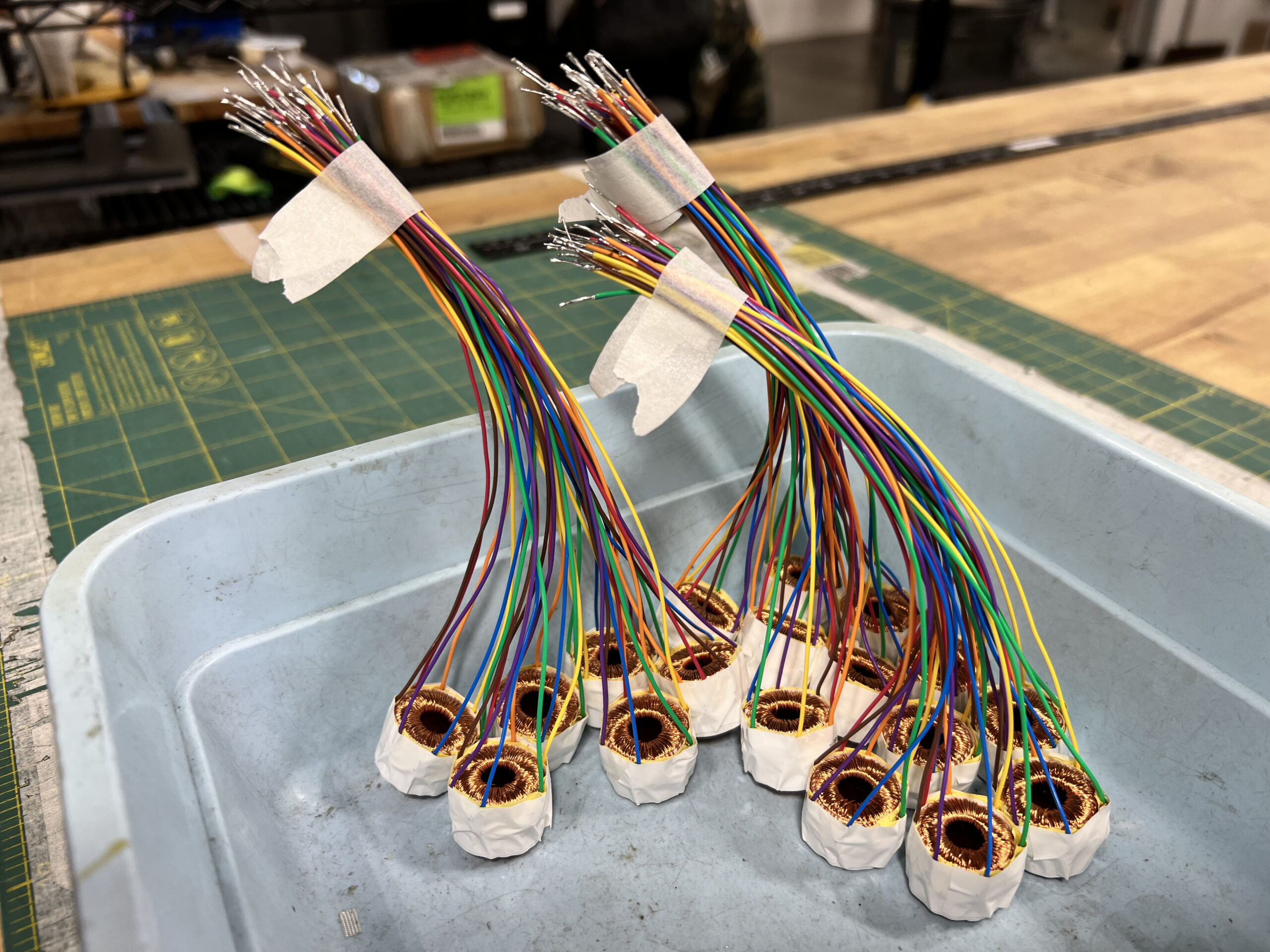

“This acquisition comes down to capacity and capability. Dena has built something customers trust, and now she'll have the manufacturing capacity, engineering depth, and quality support to take on bigger, more complex programs without ever asking her customers to accept less attention than they're used to. That commitment doesn't change—it just gets more resources behind it.”
Tyee Harpster, President & CEO, Allstar Magnetics
"I am very excited to join Allstar Magnetics, not just for myself but for all my customers who will benefit from the expanded resources and capabilities. I look forward to continuing my current customer relationships and building new ones."
Dena Arnold, General Manager, Coil Specialty Company
Allstar Magnetics is a solution-based engineering and manufacturing firm specializing in custom design solutions for ferrite distribution, custom-wound transformers/inductors, permanent magnet solutions, and assemblies, serving design engineers and project managers across the aerospace, medical, oil & gas, audio & music, industrial, and space industries.
Media Contact: Shaunmarie Gutbezahl, Hi Hat Marketing, 503-927-5772

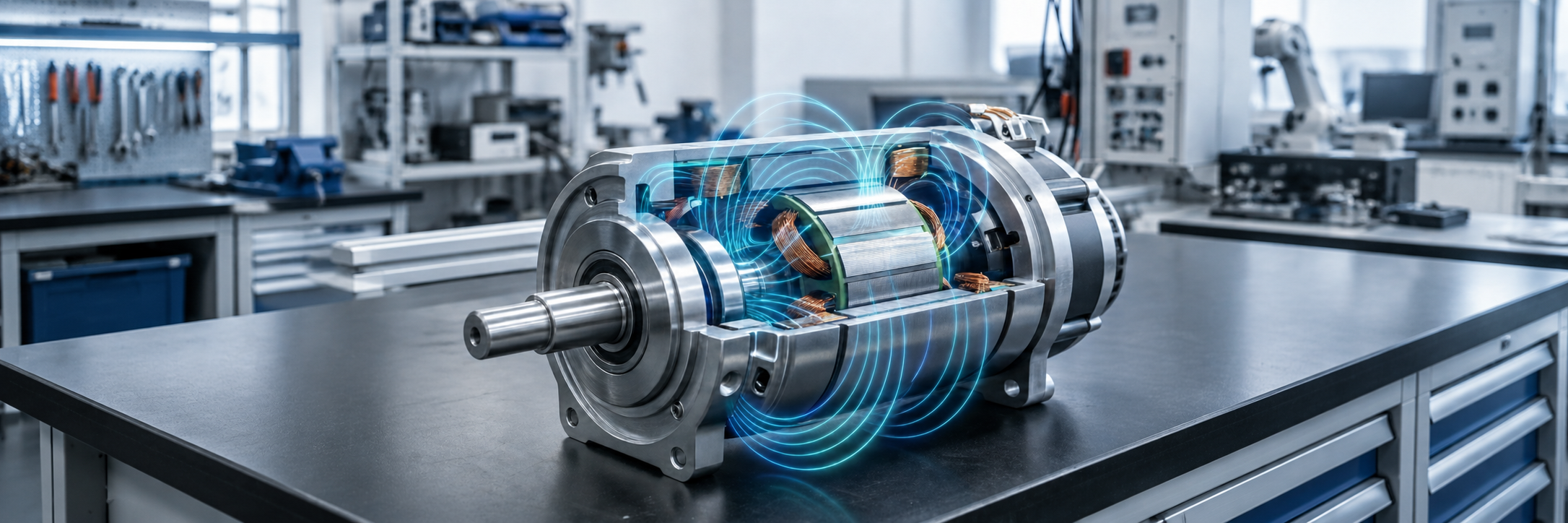
They sound almost identical, but "magnetic assembly" and "magnet assembly" refer to two completely different products — different materials, different bonding processes, and different failure points if you get it wrong. One is built from ferrite cores that shape magnetic flux; the other integrates permanent magnets into motors, drives, and precision motion systems. Confusing the two at the spec stage can mean the wrong adhesive, the wrong tolerance strategy, or a process that never scales past the prototype bench.
In our latest blog, we break down what separates ferrite core gluing from permanent magnet-to-steel bonding, where each one is used, and the manufacturing-first questions every engineer should ask before specifying a bonded magnetic assembly.
Read the full article to make sure you're specifying the right process from the start.
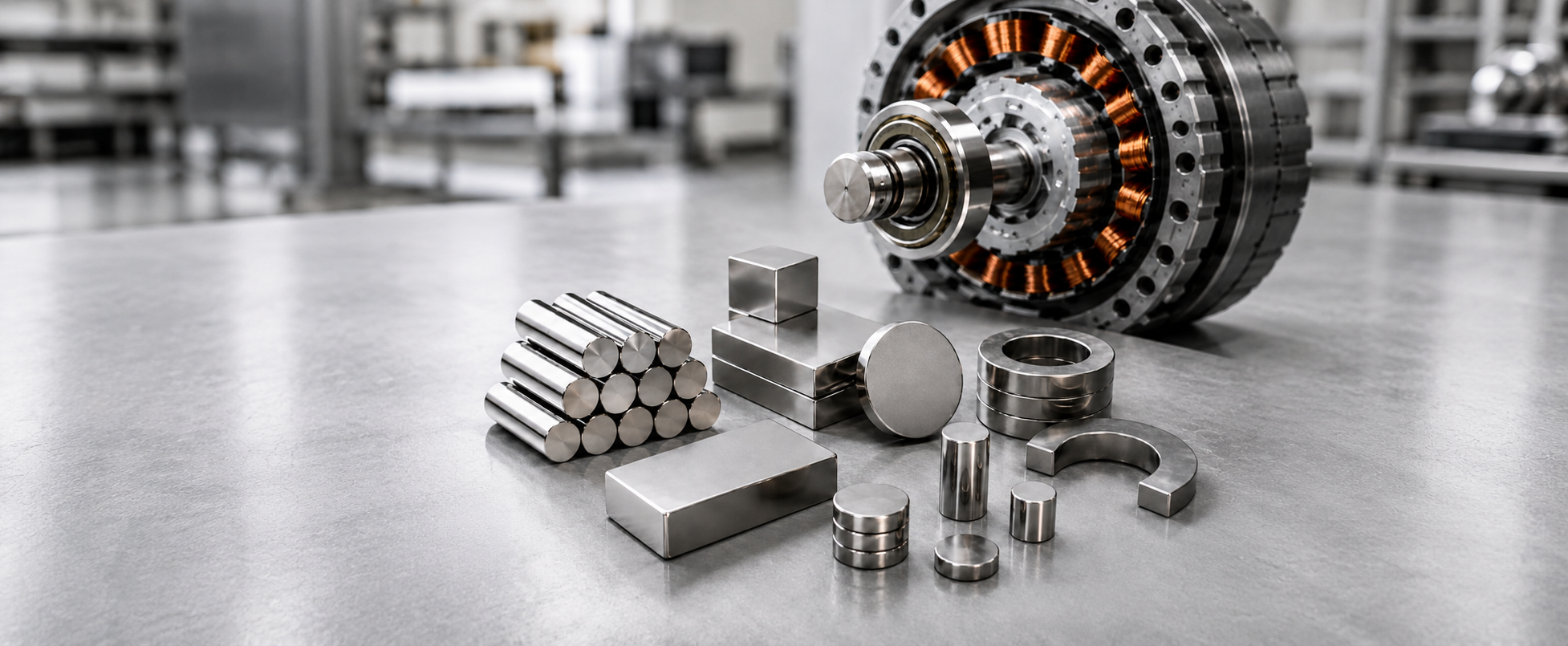
Following on the ferrite vs. magnet distinction above, here's what that looks like in practice on the permanent magnet side. Engineering teams building precision motion, sensing, and actuation systems face a familiar trade-off: high magnetic flux density in a compact footprint usually means longer lead times, more tooling investment, and redesign risk once you move from prototype to volume.
Allstar's approach removes that trade-off. By combining high-energy NdFeB magnets with CNC-machined steel structures and application-matched adhesive systems — and reviewing manufacturability before design lock — the same assembly that passes prototype validation runs unchanged at production volume.
Read the full case study to see how this engineering-led approach cuts development time and program risk.
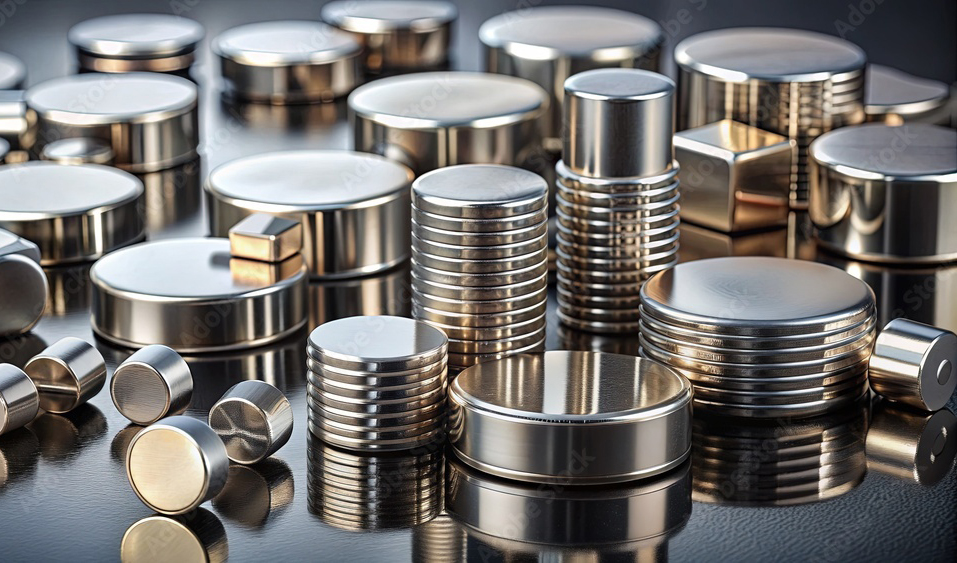
Heavy rare earth elements (HREs) dramatically improve high-temperature coercivity—but at a cost. Geographic concentration and price volatility now make HREs a material risk, not just a cost input.
HRE-free NdFeB magnets eliminate dysprosium and terbium additions while maintaining competitive energy product and coercivity at lower operating temperatures.
• Operating temperatures below ~120°C
• Moderate opposing magnetic fields
• Cost or sourcing stability is a design priority
Browse our current HRE-free NdFeB grade availability chart to match operating temperature, coercivity, and energy product values against your design requirements.
VIEW HRE-FREE GRADE AVAILABILITY CHART
• More predictable lead times
• Reduced exposure to geopolitical supply constraints
• Better long-term pricing stability
It doesn’t mean “lower performance”—it means right-sized performance for the application.
Material selection impacts supply-chain risk as much as performance. Smart grade selection can improve both.